2025 Technology Provider Of The Year!

Julian

IoT

Robustel Routers + M2M Data Connect

Why Robustel Routers + M2M Data Connect Unsteered IoT Connectivity Deliver Exceptional Reliability In today’s connected world, IoT deployments demand more than rugged hardware. They require intelligent, resilient, and network-agnostic connectivity. That’s why pairing Robustel industrial routers with M2M Data Connect’s unsteered multi-network IoT SIMs has become a go-to solution for organisations that depend on uptime, performance, and long-term reliability. Robustel: Industrial Routers Built for Real-World Demands Robustel routers are engineered for mission-critical IoT environments, combining advanced software capabilities, rugged design, and proven reliability. Widely deployed across utilities, transport, retail, and smart infrastructure, popular models include: R2010 – Industrial 4G LTE router for utilities, transport, and remote monitoring R3000 – Rugged dual-SIM router with advanced VPN and failover R3000 Lite – Cost-effective router for retail, kiosks, and digital signage R5020 – High-performance 5G router for bandwidth-intensive applications R1520 – Versatile 4G router used extensively in EV charging, CCTV, and smart cities R2110 – Automotive-grade router designed for fleet and public transport deployments While Robustel’s hardware is well known, one of its most powerful advantages is often overlooked. Robustel’s Intelligent Network Selection: A Perfect Match for Unsteered SIMs Robustel routers include advanced network selection logic that enables the device to: Scan all available mobile networks Measure signal strength, quality, and latency Automatically select the best-performing operator Re-select networks dynamically as conditions change Avoid “sticky” connections to poor-quality cells This intelligence is designed to give the router full control over connectivity. However, it can only work as intended when the SIM card does not force a preferred network. That’s where M2M Data Connect’s unsteered IoT connectivity becomes essential. Unsteered Connectivity: Let the Router Make the Smart Choice Unlike steered SIMs that prioritise one operator, M2M Data Connect’s unsteered SIMs allow Robustel routers to attach to any available network based purely on real-time performance. This unlocks the full potential of Robustel’s network selection engine, delivering: Stronger and more stable signal Lower latency Faster data throughput Fewer dropouts Seamless roaming across regions and borders Higher uptime for mission-critical deployments Robustel’s intelligence combined with M2M Data Connect’s network neutrality results in consistently superior performance. Use Cases and Sectors That Benefit Most Transport & Telematics Fleet tracking Passenger Wi-Fi Vehicle diagnostics Public transport systems EV Charging & Energy Smart EV charging infrastructure Solar and battery monitoring Smart grid connectivity CCTV & Security Remote surveillance ANPR cameras Temporary and mobile site security Retail & Payments POS terminals Self-service kiosks Vending machines Digital signage Industrial & Manufacturing PLC connectivity SCADA systems Predictive maintenance Smart Cities Air quality monitoring Parking systems Traffic management Healthcare Remote diagnostics Telemedicine units Mobile clinics Conclusion: Industrial IoT Without Compromise Robustel routers deliver rugged hardware and intelligent network selection.M2M Data Connect delivers unsteered, multi-network IoT connectivity. Together, they form a high-performance, resilient, and scalable IoT solution that consistently outperforms steered alternatives — across every industry and deployment scale. If you want, I can also: Optimise this for SEO keywords Create a shortened LinkedIn or landing-page version Match it exactly to the M2M Omnichannel blog style guide Add internal CTAs or product links

Environmental

Environment Monitoring

Environment Monitoring Use Case Customer Profile A large environmental services organisation responsible for monitoring air quality, water levels, soil conditions and climate data across multiple remote locations in the UK and Europe. Their operations support government agencies, local councils, agriculture, and private industry. The Challenge The customer needed a reliable way to collect real‑time environmental data from hundreds of sensors deployed across rural and hard‑to‑reach areas. Their existing connectivity solution suffered from: Poor network coverage in remote locations Unreliable data transmission, causing gaps in reporting High maintenance costs due to site visits for SIM swaps and troubleshooting Lack of centralised control over SIMs and devices Slow response times when environmental thresholds were breached These issues created operational inefficiencies, compliance risks, and delays in delivering accurate environmental insights to stakeholders. The Solution: M2M Data Connect Multi‑Network IoT Connectivity M2M Data Connect deployed multi‑network IoT SIMs and a unified connectivity management platform to ensure every sensor stayed online, regardless of location. Key Components Multi‑network SIMs that automatically switch to the strongest available signal Real‑time data transmission from sensors to the customer’s cloud platform Centralised SIM management for activation, monitoring and diagnostics Low‑power IoT connectivity optimised for long‑life environmental sensors Instant alerts when environmental thresholds are exceeded Results & Impact 99.9% Uptime Across All Monitoring Sites Multi‑network connectivity eliminated coverage gaps, ensuring continuous data flow from remote sensors. Faster Environmental Response Real‑time alerts enabled the customer to respond immediately to pollution spikes, flooding risks, or soil condition changes. Reduced Operational Costs Fewer site visits, fewer SIM swaps, and remote diagnostics cut maintenance costs significantly. Improved Data Accuracy & Compliance Consistent, uninterrupted data streams strengthened reporting for regulatory bodies and environmental audits. Scalable Deployment The customer can now add new sensors anywhere in the UK or Europe without worrying about coverage or configuration. Why M2M Data Connect? Proven reliability in rural and remote environments Multi‑network resilience across Europe Easy‑to‑use management portal Flexible data plans for large sensor deployments Expert support for environmental and IoT projects Summary M2M Data Connect enabled the customer to transform their environmental monitoring operations with robust, always‑on IoT connectivity. With reliable data, lower costs, and faster response times, the organisation can now deliver higher‑quality insights and meet growing environmental compliance demands.

IoT

Signal Strength vs Bandwidth: Why the Difference Matters More Than Ever

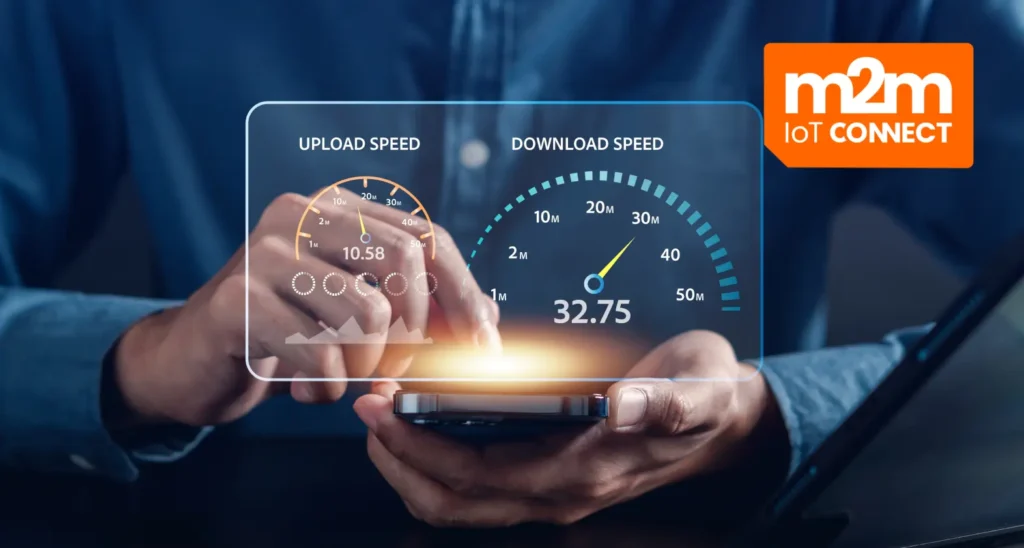
Strong signal doesn’t always mean fast data — and fast data doesn’t always mean a strong signal. Signal strength and bandwidth are two very different parts of mobile connectivity, and understanding the gap between them is essential for anyone deploying IoT, mobile services, or smart infrastructure. Most people assume that “full bars” on a phone or IoT device means great performance. But in reality, signal strength and network bandwidth are two separate forces that shape your mobile experience and they don’t always move together. Understanding the difference is crucial for businesses deploying IoT devices, mobility solutions, or anything that relies on consistent mobile connectivity. What Is Network Signal Strength? Signal strength measures how well your device can “hear” the nearest cell tower. It’s influenced by: Distance from the mast Buildings, trees, and terrain Indoor vs outdoor location Device antenna quality Signal strength determines whether you can connect at all. Weak signal often leads to: Dropped calls Failed data sessions Unreliable IoT device behaviour Research shows that signal strength varies dramatically even within the same postcode due to local obstacles and tower placement. What Is Network Bandwidth? Bandwidth is the capacity of the network to carry data — essentially, how much “lane space” is available for traffic. It’s affected by: Network technology (4G, 5G, 5G SA) How many users are connected Spectrum allocation Network congestion Ofcom’s latest mobile performance data highlights how bandwidth impacts real‑world experiences like video streaming, latency, and data success rates. Even with strong signal, bandwidth can be low if: The network is congested The mast is overloaded You’re on an older technology layer (e.g., 3G/4G instead of 5G) Signal Strength vs Bandwidth: Key Differences Why This Matters for Mobile & IoT Deployments 1. Strong signal doesn’t guarantee fast speeds A device may show full bars but still struggle with data because the network is congested common in cities, stadiums, and busy transport hubs. 2. Weak signal can break mission‑critical services IoT devices in rural or indoor environments often fail not because of bandwidth, but because they simply can’t maintain a stable connection. Coverage varies widely across the UK, even within the same area, making signal strength a critical planning factor. 3. Bandwidth determines performance for data‑heavy applications 5G SA networks deliver lower latency and higher throughput, but only when bandwidth is available — something Ofcom’s performance data highlights clearly. 4. IoT devices behave differently from smartphones Many IoT devices: Use low‑power radios Operate in fixed locations Rely on consistent, not fast, connectivity For them, signal strength is often more important than raw bandwidth. 5. Choosing the right SIM type matters Non‑steered, multi‑network SIMs ensure devices connect to the strongest available signal essential when signal strength varies between networks. Final Thoughts Signal strength determines whether you can connect. Bandwidth determines how well that connection performs. Both matter — but for different reasons. For mobile users, the difference explains why you can have full bars but slow speeds. For IoT deployments, it can be the difference between a device that works flawlessly and one that fails silently. Understanding both helps businesses design more resilient, predictable, and scalable connectivity strategies.

IoT

Why Teltonika Routers Thrive on Unsteered IoT Connectivity

Unlocking Peak IoT Performance: Why Teltonika Routers Thrive on Unsteered IoT Connectivity In the world of IoT, reliability isn’t a luxury — it’s the foundation everything else depends on. Whether you’re deploying devices in transport, EV charging, CCTV, retail, or industrial automation, the quality of your connectivity directly impacts the performance of your hardware. That’s why so many organisations pair Teltonika cellular routers with M2M Data Connect’s unsteered multi‑network IoT SIMs to achieve maximum uptime, resilience, and speed. Teltonika: Industrial‑Grade Routers Built for Real‑World Demands Teltonika Networks has become a global leader in cellular routers thanks to their rugged design, long‑term reliability, and powerful feature set. Popular models include: RUT240 – Compact, affordable, perfect for kiosks, EV chargers, and small deployments RUT950 – Dual‑SIM, dual‑modem resilience for mission‑critical applications RUT956 – GNSS + I/O support for transport and telematics RUTX11 – High‑speed LTE‑A with advanced Wi‑Fi and VPN capabilities RUTX14 – Cat 12 LTE for high‑bandwidth industrial applications These routers are engineered for environments where failure simply isn’t an option — but even the best hardware is only as good as the connectivity behind it. The Problem With Steered Connectivity Many IoT SIMs on the market are steered, meaning the SIM is programmed to prefer one network over others. This creates several issues: Devices cling to a weak network even when a stronger one is available Slower speeds and higher latency Increased packet loss More device reboots and connection drops Reduced hardware lifespan due to constant reconnection attempts For Teltonika routers — which are designed to make intelligent network decisions — steering actively works against their capabilities. Unsteered Connectivity: Let the Router Choose the Best Network M2M Data Connect provides unsteered, multi‑network IoT connectivity, meaning the SIM has no preferred network. Instead, the Teltonika router is free to attach to whichever operator offers: The strongest signal The lowest latency The highest throughput The most stable connection at that moment This dramatically improves performance, especially in environments where signal conditions change throughout the day. Real‑World Example: Transport Fleets A fleet using Teltonika RUT956 routers for live vehicle tracking saw: Faster GPS reporting More stable VPN tunnels Fewer dropouts in rural areas Better performance when crossing network boundaries Unsteered connectivity allowed each router to dynamically switch between O2, Vodafone, and EE based on real‑time conditions. Example: CCTV & Security Systems A security integrator using RUT950 routers for remote CCTV monitoring reduced downtime by over 40% after switching from a steered SIM to M2M Data Connect’s unsteered solution. Cameras stayed online even during localised network outages. Example: Retail & Payment Terminals Retailers using RUT240 routers for payment terminals saw faster authorisation times and fewer transaction failures — critical for customer experience and revenue protection. Unified APN for Simplicity and Speed M2M Data Connect uses a single unified APN across all supported networks and countries. This means: One configuration works everywhere Faster deployments Fewer support tickets Easier device cloning and scaling No need to reconfigure routers when expanding internationally For Teltonika deployments, this is a huge advantage — configure once, deploy anywhere. Conclusion: The Perfect Pairing for High‑Performance IoT Teltonika routers provide the industrial‑grade hardware.M2M Data Connect provides the resilient, unsteered connectivity. Together, they deliver: Higher uptime Faster speeds Better stability Lower maintenance Longer hardware lifespan Seamless multi‑network coverage across borders If your IoT deployment depends on reliability, this combination gives you a measurable performance edge.

IoT

Multi‑Network IoT Data SIM Cards

Why Multi‑Network IoT Data SIM Cards Are Becoming Essential for Modern Connectivity In today’s connected world, IoT deployments are no longer limited to controlled environments or single‑network footprints. Devices are now expected to operate in remote locations, across borders, inside moving vehicles, and in mission‑critical environments where downtime simply isn’t an option. That’s why multi‑network IoT data SIM cards have become one of the most important tools for organisations building reliable, scalable, and resilient IoT solutions. What Are Multi‑Network IoT SIM Cards? Unlike traditional SIM cards that lock devices to a single mobile operator, multi‑network IoT SIMs allow devices to connect to multiple mobile networks using a single SIM profile. This means an IoT device can automatically attach to whichever network offers the strongest signal or lowest latency at any given moment. For businesses deploying IoT at scale, this flexibility is a game‑changer. Why Multi‑Network SIMs Matter 1. Maximum Uptime Through Network Redundancy If one network goes down or becomes congested, the device can instantly switch to another available operator. This dramatically reduces downtime for: EV chargers CCTV and security systems Transport and telematics Smart city infrastructure Industrial automation In environments where connectivity is mission‑critical, redundancy isn’t a luxury — it’s a requirement. 2. Better Performance in Real‑World Conditions Signal strength varies constantly due to geography, weather, building materials, and network load. Multi‑network SIMs allow devices to choose the best available network dynamically, improving: Latency Throughput Stability VPN reliability This is especially valuable for high‑bandwidth applications like video surveillance or real‑time telemetry. 3. Seamless Cross‑Border Connectivity For devices that move — such as fleet vehicles, logistics assets, or maritime equipment — multi‑network SIMs ensure uninterrupted service across regions and countries without manual reconfiguration. 4. One SIM, One APN, Global Reach Many multi‑network IoT providers offer a unified APN, meaning: One configuration works everywhere Faster deployments Easier scaling Fewer support issues This dramatically simplifies device rollout, especially for manufacturers and integrators deploying thousands of units. 5. No Need for Expensive Fibre or Fixed Lines Multi‑network cellular connectivity allows organisations to deploy IoT solutions in locations where fibre is unavailable, too slow to install, or too expensive to justify. This makes it ideal for: Temporary sites Rural deployments Pop‑up retail Construction Remote monitoring Steered vs Unsteered: The Critical Difference Not all multi‑network SIMs are equal. Steered SIMs prioritise one network, even if it’s weak. Unsteered SIMs let the device choose the best network at all times. For IoT hardware with intelligent network‑selection logic — such as Teltonika, Robustel, Cradlepoint, and Ericsson routers — unsteered connectivity unlocks the full performance of the device. Use Cases Across Industries Transport & Telematics Fleet tracking Passenger Wi‑Fi Vehicle diagnostics Energy & Utilities EV charging Smart grid Solar and battery monitoring Security & CCTV Remote surveillance ANPR cameras Temporary site security Retail & Payments POS terminals Kiosks Digital signage Industrial & Manufacturing SCADA PLC connectivity Predictive maintenance Smart Cities Parking systems Air quality sensors Traffic monitoring Conclusion: The Future of IoT Is Multi‑Network As IoT deployments grow in scale and complexity, organisations need connectivity that is flexible, resilient, and built for real‑world conditions. Multi‑network IoT data SIM cards deliver exactly that — ensuring devices stay online, perform better, and scale effortlessly across regions and industries. For businesses looking to build reliable IoT solutions, multi‑network connectivity isn’t just an upgrade. It’s the foundation of a future‑proof strategy.

Uncategorized

Global IoT Sim Blog

What Is a Global IoT SIM Card — How Does It Actually Work and is it Worth it? As IoT deployments expand across borders and industries, many organisations turn to global IoT SIM cards to simplify connectivity. On paper, a global SIM sounds ideal: one SIM, one APN, one contract, and coverage in dozens of countries. But the reality is more complex and understanding how global IoT SIMs actually behave is essential for building reliable IoT solutions. What Is a Global IoT SIM Card? A global IoT SIM card is a SIM profile designed to work across multiple countries using roaming agreements. Instead of being tied to a single domestic operator, it can connect to partner networks around the world. In theory, this means: One SIM works globally No need to swap SIMs when crossing borders Centralised billing Consistent APN and security policies But behind the scenes, global SIMs still behave like roaming SIMs and that comes with limitations. How Global IoT SIMs Actually Work Every global IoT SIM has a home network, even if it’s marketed as “global”. This home network is usually based in the EU or US. When the device powers on, the SIM follows a strict priority order: Connect to the home network If the home network is unavailable, connect to a roaming partner Stay on that network until it becomes completely unusable This behaviour is built into the SIM profile and is part of how roaming works worldwide. The Hidden Problem: Home Network Preference Here’s the issue most businesses never hear about: A global IoT SIM will always try to use its home network even if the signal is extremely weak or unable to pass data. This means: Devices cling to a poor‑quality network They ignore stronger networks nearby They appear “connected” but cannot send or receive data They repeatedly attempt to attach to the home network, draining power and causing downtime This is a major problem in rural areas, indoor environments, moving vehicles, and countries where the home operator has limited coverage. Why Does This Happen? Commercial Reasons, Not Technical Ones Major operators such as Vodafone, Telefónica, Orange, and others offer global IoT SIMs that behave this way because it benefits their commercial agreements, not because it benefits the customer. These operators: Want devices to stay on their own network whenever possible Prioritise roaming partners that offer the best wholesale rates Steer devices away from networks that cost them more Lock SIMs into preferred network lists This is known as network steering, and it is driven entirely by commercial incentives, not by performance, reliability, or customer needs. In other words: Global SIMs are designed to protect the operator’s revenue, not your uptime. The Impact on IoT Deployments This behaviour can cause: 1. Unreliable Connectivity Devices appear online but cannot pass data. 2. Higher Latency Traffic may be routed back to the home country. 3. Increased Power Consumption Devices constantly search for the home network. 4. Poor Performance in Critical Applications CCTV, EV chargers, telematics, and industrial systems all suffer. 5. Difficult Troubleshooting The device “looks connected” but behaves unpredictably. Why Many Businesses Are Moving to Unsteered Multi‑Network IoT SIMs To avoid these issues, many organisations now choose unsteered multi‑network IoT SIMs instead of traditional global SIMs. Unsteered SIMs: Do not prioritise a home network Allow the device to choose the strongest available operator Avoid ghost‑signal problems Deliver lower latency Improve uptime and stability Work better with intelligent routers (Teltonika, Robustel, Cradlepoint, Ericsson, etc.) This gives the device true freedom to attach to the best network — not the one the SIM is commercially steered toward. Conclusion: Global SIMs Are Convenient — But Not Always Reliable Global IoT SIM cards offer simplicity, but they come with a built‑in limitation: They always prefer their home network, even when it’s the worst option available and major operators like Vodafone and Telefónica design them this way for commercial reasons. For IoT deployments where uptime, stability, and performance matter, unsteered multi‑network connectivity is often the smarter choice. It ensures devices stay online, choose the best network, and avoid the pitfalls of home‑network steering & delivering the reliability modern IoT applications demand.

Events

NEC Birmingham

Energy Technology Live 2026: Driving the Future of Clean, Connected Energy11–12 March 2026 — NEC Birmingham, Hall 9 Energy Technology Live returns to the NEC this March, bringing together the UK’s most forward-thinking innovators, engineers, and energy leaders. As the combined home of The Distributed Energy Show and The Energy Storage Show, it has become one of the most influential events for organisations shaping the future of renewable power, decentralised systems, and industrial decarbonisation. A Showcase of the Technologies Powering Net Zero The event highlights the solutions transforming how energy is generated, stored, and managed, including: Distributed and decentralised energy systems Grid-scale renewables Battery and long-duration energy storage Hydrogen and alternative fuels AI-driven optimisation and automation Smart infrastructure and digital energy platforms With the UK accelerating its net-zero strategy, the need for flexible, resilient, and data-driven energy systems has never been greater. Why IoT Connectivity Is Critical for This Sector Behind every modern energy system sits a layer of IoT connectivity that enables real-time monitoring, automation, and optimisation. Reliable multi-network connectivity is essential for: Remote asset monitoring across distributed sites Predictive maintenance for energy storage systems Smart metering and usage analytics Grid balancing and demand-side response Secure data transmission from edge devices Managing fleets of sensors, batteries, and renewable assets Without robust IoT infrastructure, energy systems cannot operate efficiently, safely, or at scale. Connectivity is the backbone that turns hardware into intelligent, responsive, and revenue-generating assets. Meet M2M Data Connect at Energy Technology Live M2M Data Connect will be at the NEC throughout the event, meeting organisations that want to strengthen their energy strategies with secure, scalable IoT connectivity. We’ll be discussing: Multi-network IoT SIMs and eSIMs for distributed energy assets Edge-ready routers for industrial and remote environments Real-time monitoring and device management Connectivity solutions for storage, renewables, and smart infrastructure How to scale deployments across the UK and globally Whether you’re deploying energy storage systems, managing distributed assets, or building next-generation energy platforms, our connectivity solutions are designed to help you operate smarter and grow faster. Join Us at the NEC Energy Technology Live 202611–12 March — NEC Birmingham, Hall 9 Come and meet the M2M Data Connect team to explore how intelligent IoT connectivity can transform your energy operations and unlock new opportunities across the sector.

Internet of Things (IoT)

SGP.32 eSIM

SGP.32 eSIM: The Next Evolution of IoT Connectivity at MWC How global players are racing to define the future of scalable, secure IoT provisioning The eSIM ecosystem is entering its most transformative phase yet. At MWC, the spotlight is firmly on SGP.32 the GSMA’s next‑generation standard designed to simplify and accelerate IoT device onboarding at scale. Unlike consumer‑focused standards, SGP.32 is engineered specifically for industrial, enterprise, and massive IoT deployments, where automation, security, and lifecycle control are mission‑critical. SGP.32 is more than a technical upgrade. It represents a structural shift in how IoT devices are manufactured, deployed, and managed globally. And because of its potential to reshape the entire IoT connectivity landscape, companies across the ecosystem are investing enormous time, energy, and capital in the race to capture early market share. What SGP.32 Means for IoT SGP.32 introduces a modern, modular, and automated approach to IoT eSIM provisioning. Key advantages include: Faster, more flexible device onboarding Zero‑touch provisioning for large fleets Better support for constrained IoT devices Stronger authentication and security Reduced reliance on proprietary integrations More efficient lifecycle management For IoT manufacturers and solution providers, SGP.32 unlocks the ability to deploy devices globally with far less friction and far greater control. The Companies Leading the SGP.32 Race Across the IoT ecosystem, both established giants and fast‑moving innovators are building SGP.32‑ready solutions. Here’s what the major players are achieving: Thales Thales is rolling out SGP.32‑compliant SM‑DP+ and SM‑DS platforms designed for industrial IoT. Their work focuses on secure provisioning, automated lifecycle management, and global scalability — forming the backbone for many operators preparing for SGP.32. G+D (Giesecke+Devrient) G+D is developing SGP.32‑ready eSIM management systems optimised for massive IoT deployments. Their emphasis is on energy‑efficient provisioning, multi‑network resilience, and simplified integration for OEMs. STMicroelectronics STMicroelectronics is integrating SGP.32 support directly into its IoT chipsets and secure elements, enabling: Zero‑touch provisioning at the silicon level Reduced manufacturing complexity Faster global deployment for device makers Their hardware‑level adoption is essential for scaling SGP.32 across sensors, modules, and industrial devices. Telenor IoT Telenor IoT is actively testing and validating SGP.32 provisioning flows across its global network footprint. Their focus includes: Seamless profile switching for roaming IoT fleets Enhanced security and authentication Large‑scale lifecycle management Their early adoption accelerates operator readiness across Europe and Asia. IDEMIA IDEMIA is building SGP.32‑compliant eSIM operating systems and secure elements. Their work includes: Next‑generation eUICC firmware High‑security provisioning for industrial devices Interoperability testing with major SM‑DP+ platforms This ensures SGP.32 works reliably across diverse hardware ecosystems. Kigen Kigen is one of the strongest advocates for SGP.32, developing lightweight, energy‑efficient eSIM solutions for constrained IoT devices. Their achievements include: Early SGP.32 proof‑of‑concept deployments Developer‑friendly APIs for OEMs Strong push for open, interoperable standards Kigen’s work is especially important for LPWAN and low‑power IoT. 1GLOBAL 1GLOBAL is building SGP.32‑ready connectivity infrastructure designed for global IoT deployments. Their focus includes: Real‑time provisioning Multi‑network resilience Simplified onboarding for enterprise IoT They are positioning themselves as a flexible, modern alternative to legacy operator systems. 1oT 1oT is developing SGP.32‑compatible eSIM orchestration tools aimed at startups, scale‑ups, and mid‑market IoT providers. Their achievements include: Unified eSIM management dashboards Automated provisioning workflows Early SGP.32 testing with module manufacturers They are helping democratise access to next‑gen eSIM technology. Simplex Wireless Simplex Wireless is pushing SGP.32 adoption through developer‑friendly connectivity tools and simplified provisioning flows. Their work includes: SGP.32‑ready eSIM APIs Rapid onboarding for IoT devices Flexible connectivity for global deployments They are positioning themselves as an agile, developer‑centric player in the SGP.32 space. A Competitive Race to Lead the SGP.32 Era With so many companies investing heavily — from chipset makers and secure‑element providers to operators, MVNOs, and IoT platforms — SGP.32 is becoming one of the most competitive and transformative developments in the IoT industry. Everyone wants to be first. Everyone wants to define the standard. Everyone wants to capture the early advantage. How M2M Data Connect Fits Into This Landscape As part of the M2M Data Connect Group, we’re building SGP.32‑ready IoT eSIM infrastructure designed for: Automated provisioning at scale Zero‑touch onboarding for routers, sensors, and industrial devices Multi‑network resilience across 600+ global networks Advanced lifecycle management Seamless integration for OEMs and IoT platforms Our mission is to make SGP.32 practical, accessible, and scalable for real‑world IoT deployments.

Uncategorized

Technology Provider of the Year 2025

Proud Moment: M2M Data Connect Named Technology Provider of the Year 2025 We’re thrilled to share that M2M Data Connect has been named Technology Provider of the Year 2025 a recognition that means so much to our entire team. This award isn’t just a trophy; it’s a celebration of the work we’ve poured into building reliable, scalable connectivity for taxi fleets across the UK and beyond. Most importantly, it reflects the trust placed in us by operators, partners, and respected voices throughout the industry. In a sector where every booking, every dispatch, and every customer interaction depends on seamless communication, connectivity has become the backbone of modern taxi operations. Our mission has always been to deliver technology that operators can depend on — not just today, but as the industry evolves into a more digital, more connected future. What Makes Our Platform Stand Out Over the past year, we’ve focused on expanding and strengthening the tools that help taxi operators run smarter, faster, and more efficiently. Here’s what sets M2M Data Connect apart: TaxiBot Integration TaxiBot has transformed the way passengers book taxis by enabling instant bookings across Instagram, WhatsApp, Messenger, WebBots, kiosks, and more. With Gen Z increasingly avoiding app downloads, meeting customers on the platforms they already use has become essential. TaxiBot makes that possible — and our connectivity powers it behind the scenes. WhatsApp Smart Messaging WhatsApp remains the world’s most popular messaging app, and taxi passengers expect real‑time updates. Our platform enables operators to send instant confirmations, driver updates, and dispatch instructions directly through WhatsApp, creating a smooth, familiar experience for riders and drivers alike. White‑Label SMS Brand consistency matters. Our white‑label SMS solution gives operators full control over their customer communication — from booking alerts to promotions — without relying on third‑party branding. It’s simple, scalable, and designed to strengthen operator identity. Multi‑Network Data SIMs Connectivity must be resilient, especially for fleets on the move. Our multi‑network data SIMs deliver secure IoT infrastructure, global roaming, and reliable coverage, ensuring that vehicles stay connected no matter where they operate. It’s the foundation that keeps dispatch systems, apps, and booking platforms running without interruption. Connectivity: The Heart of Customer Experience For taxi operators, connectivity isn’t just another feature — it’s the engine that keeps everything moving. From the moment a passenger books a ride to the second they step out of the vehicle, every touchpoint relies on dependable communication. Booking confirmations Driver updates Fleet tracking Payment notifications Customer service When connectivity works flawlessly, the entire passenger experience feels effortless. That’s what we strive to deliver every day. Looking Ahead Being named Technology Provider of the Year is an honour but it’s also motivation. It pushes us to keep innovating, keep listening, and keep building technology that empowers taxi operators to thrive in a rapidly changing digital landscape. Here’s to the future of smarter, more connected mobility and to the Fleet operators who inspire us to keep raising the bar.

Content

Smart City IoT Connectivity

Smart City IoT Connectivity: Why M2M Data Connect’s Full Suite Is the Key to Streamlined Services Smart cities are no longer a futuristic concept — they are here today, reshaping how people live, work, and move. From intelligent transport systems to connected healthcare, the backbone of every smart city is reliable IoT connectivity. But connectivity on its own isn’t enough. To truly streamline services and enable efficient automation, cities need a comprehensive solution that integrates IoT data, SMS communication, and multi-channel citizen engagement. That’s where M2M Data Connect’s full connectivity suite comes in. IoT Connectivity: The Foundation of Smart Cities IoT devices are embedded throughout modern city infrastructure — from sensors in traffic lights to smart meters in homes, GPS units in public transport, and monitoring systems in utilities. Without seamless connectivity, these devices cannot deliver the real-time data required to power automation and informed decision-making. M2M Data Connect provides the essential infrastructure through: Multi-network IoT SIMs that ensure devices stay online across regions and borders Secure VPN/APN options that safeguard sensitive city data Scalable management platforms that allow thousands of devices to be controlled from a single dashboard This enables smart cities to continuously monitor infrastructure, optimise energy usage, improve mobility, and deliver stable, uninterrupted services. SMS Services: Critical for Citizen Engagement While IoT connectivity drives machine-to-machine communication, SMS remains one of the most effective and reliable ways to reach people directly. Cities can use SMS for: Emergency alerts, including road closures, severe weather warnings, and public safety updates Service notifications, such as utility maintenance or public transport schedule changes Two-way communication that enables residents to interact with city services in real time Integrating SMS into the IoT ecosystem ensures communication remains accessible, inclusive, and immediate — without losing the human element. Multi-Channel Bots: Automating Citizen Services Automation is essential to smart city efficiency, but it must remain accessible to all users. Multi-channel bots provide a unified service interface across the platforms citizens already use, including WhatsApp, Instagram, Messenger, Line, TikTok, Telegram, web chat, and other social channels. These bots can: Deliver automated FAQs for transport, healthcare, utilities, and local services Log service requests — such as pothole reports or power outages — directly into city systems Offer personalised engagement with AI-driven responses based on user history and preferences This reduces the pressure on call centres, shortens response times, and ensures 24/7 availability of digital city services. Multi-Sector Impact Combining IoT connectivity, SMS communication, and multi-channel automation creates a unified smart city ecosystem with benefits across every major sector: Transport & Mobility — Real-time traffic management, GPS-enabled fleet tracking, automated passenger notifications.Utilities & Energy — Smart metering, outage alerts, predictive maintenance, demand-side management.Healthcare — Remote patient monitoring, appointment reminders, emergency communication.Public Safety — Connected surveillance, automated incident reporting, citizen notifications.Retail & Commerce — Smart vending, automated customer engagement, seamless connectivity for payments. Conclusion Smart cities require more than IoT devices alone — they need integrated connectivity solutions that connect machines, services, and citizens. By using M2M Data Connect’s complete suite of IoT connectivity, SMS services, and multi-channel bots, cities can streamline operations, enhance automation, and deliver safer, smarter, and more efficient services across every sector. In the journey toward smarter living, connectivity is the true enabler.

M2M IoT Connect Logo

Bring Your Own Carrier (BYOC) IoT SaaS Platform that unlocks unprecedented insights and gives access to advanced functionality.

M2M IoT Connect HQ

112-114 Witton Street, Northwich CW9 5NW United Kingdom

© 2026 M2M IoT Connect. All Rights Reserved. 

Scroll to Top