...

2025 Technology Provider Of The Year!

Julian

eSIMs

Travel eSIM Infrastructure

Unlocking New Revenues With M2M Data Connect’s Multi-Channel Infrastructure   Why Resellers and Technology Partners Are Turning to Messaging-Based Automation The way customers interact with digital services is changing rapidly. Apps are losing traction. Websites are becoming secondary. Messaging platforms — particularly WhatsApp, Instagram, and Messenger — have become the most natural and universal digital interfaces. For resellers and technology partners, this shift represents a significant opportunity. With M2M Data Connect’s omnichannel infrastructure, partners can now deliver automated, conversational services across multiple industries without building complex platforms from scratch. This is not simply a new product line. It is an entirely new revenue model. The Rise of Omnichannel, App-Free Customer Journeys Today’s customers expect simplicity. They want to book, buy, pay, and manage services inside the apps they already use every day. They do not want to download new apps, create accounts, or navigate complicated systems. M2M Data Connect’s omnichannel platform transforms messaging channels into fully automated service interfaces. Whether a customer: Sends a text message Taps a quick reply Records a voice note The system interprets the request, processes it, and completes the transaction instantly. This shift opens the door for partners to access markets that were previously expensive or technically complex to enter. Why This Matters for Resellers and Technology Partners 1. New Revenue Streams Without Heavy Development Costs Partners can launch ready-made solutions such as: TaxiBot ParkingBot EV Charger Bot Travel eSIM Bot SalonBot All delivered directly on top of M2M Data Connect’s infrastructure. There is no need to build: Messaging integrations AI workflows Payment routing systems Authentication layers Multi-channel logic The platform handles the technical complexity, allowing partners to focus on sales, onboarding, and customer relationships. 2. Expand Into High-Growth Sectors Instantly M2M’s omnichannel infrastructure supports automation across multiple industries, including: Mobility and taxi dispatch Parking and EV charging Travel and eSIM services Hospitality and holiday rentals Retail and appointment booking Local services and on-demand businesses Partners can enter any of these verticals with minimal friction, offering solutions that are proven, scalable, and already in demand. 3. Reach New Audiences Through Messaging Platforms Traditional apps and websites miss large segments of the market — particularly users who avoid downloading apps or creating accounts. Messaging platforms, however, are nearly universal. By delivering services through WhatsApp, Instagram, and Messenger, partners enable operators to reach: New demographics New geographic regions New customer behaviours Higher conversion rates This dramatically increases the value partners can provide. 4. Automation That Reduces Operator Costs Every automated booking, payment, or customer interaction reduces manual administration for operators. This leads to: Lower staffing costs Faster response times Improved customer satisfaction Greater operational capacity Partners who deliver automation become essential to their clients’ growth — and can structure pricing accordingly. 5. Scalable Infrastructure Built for High-Volume Messaging M2M Data Connect provides the infrastructure backbone, including: High-volume message handling Intelligent routing for voice and text Secure payment processing Real-time booking logic Global scalability Partners do not need to manage uptime, compliance, or technical complexity. They integrate once and scale without limitations. The Revenue Potential With M2M’s omnichannel platform, partners can monetise through multiple models: Monthly SaaS subscriptions Per-booking or per-transaction fees White-label solutions Industry-specific service bundles Add-on integrations Managed service offerings This creates recurring, predictable revenue — the foundation of sustainable reseller growth. Enter New Markets Faster Than Ever Because the infrastructure is both channel-agnostic and industry-agnostic, partners can expand into new markets without rebuilding systems. For example: Target taxi fleets by launching TaxiBot Enter the EV charging sector with EV Charger Bot Offer travel connectivity with Travel eSIM Bot The infrastructure remains consistent. Only the use case changes. The Future Is Omnichannel, Automated, and Partner-Driven M2M Data Connect’s omnichannel infrastructure is more than a technology platform. It is a growth engine for resellers and technology partners. It enables them to: Launch new services quickly Enter new verticals confidently Reach broader audiences Deliver automation at scale Build recurring revenue streams Stay ahead of market shifts As customer behaviour continues to move toward messaging-based interactions, partners who adopt this model early will lead the next phase of digital transformation. Book a Meeting If you have read this far, you are already thinking about the opportunity. Now is the time to explore how M2M Data Connect’s multi-channel infrastructure can help you unlock new revenue streams and expand into new markets. Book a meeting with our team to discuss how you can start building your omnichannel offering today.


Internet of Things (IoT)

Solving Warehouse Connectivity Challenges

Bridging the Gap Between Hardware and Reliable IoT Warehouses are the beating heart of modern logistics. They’re fast-moving, data-driven, and increasingly automated. Yet despite innovation in robotics, scanners, sensors, and warehouse management systems, one issue continues to undermine efficiency across the sector: Unreliable connectivity. It’s the silent productivity killer — slowing operations, breaking workflows, and creating costly blind spots. For many warehouse operators, this problem has persisted for years. But with the right IoT connectivity and industrial hardware solutions, those long-standing issues can finally be solved. The Harsh Reality: Why Warehouses Struggle with Connectivity Warehouses are uniquely challenging environments for wireless networks. They’re not offices. They’re not retail spaces. They’re industrial environments with industrial obstacles. Here are the most common connectivity pain points operators face: 1. Thick Walls, Metal Racking & RF Interference Warehouses are typically built from steel, concrete, and insulated panels — materials that absorb or reflect wireless signals. Add in: High metal shelving Forklifts Heavy machinery Dense stock movement …and you create a perfect storm for signal degradation. The result? Devices drop offline Scanners freeze mid-task CCTV streams buffer Sensors fail to report 2. Dead Zones That Shift as Stock Moves Warehouse layouts are never static. Pallets move. Racks fill and empty. Seasonal peaks increase density. A Wi-Fi network that worked perfectly in January may be unreliable by April. These shifting dead zones disrupt: Barcode scanning Inventory tracking AGV and robot navigation CCTV coverage Environmental monitoring 3. Overloaded Wi-Fi Networks Many warehouses rely on a single Wi-Fi infrastructure to support: Staff handheld devices IoT sensors CCTV systems Printers Tablets Robots and automation systems Visitor devices Wi-Fi was never designed for this level of industrial load. The result is congestion, leading to: Latency Packet loss Device disconnections Slow system updates 4. Temporary Sites & Rapid Deployment Challenges Pop-up warehouses, seasonal overflow sites, and new distribution centres often require immediate connectivity. But fixed broadband installations can take: 30 days 60 days Sometimes even longer Warehouse operations simply can’t wait that long. 5. Security & Compliance Risks When devices drop offline, so does visibility. This can create: Gaps in CCTV footage Missed temperature alerts Lost tracking data Compliance failures For industries such as food storage, pharmaceuticals, and high-value goods, this isn’t just inconvenient — it’s unacceptable. The Good News: Solving Connectivity at the Source Warehouses don’t just need hardware. They need hardware that stays connected. That’s where M2M Data Connect comes in. Our IoT connectivity and industrial hardware solutions are specifically designed to overcome the challenges of warehouse and industrial environments. How M2M Data Connect Bridges the Warehouse Connectivity Gap 1. Multi-Network IoT SIMs for Guaranteed Uptime Instead of relying on a single mobile network, M2M IoT SIMs automatically connect to the strongest available signal. If one network drops, the SIM switches instantly. This ensures: Scanners stay online Sensors report in real time CCTV streams remain stable AGVs and robots maintain navigation No dead zones. No downtime. No disruption. 2. Private APNs & Secure VPNs for Industrial-Grade Security Warehouses handle sensitive operational data — inventory levels, customer orders, logistics metrics. M2M provides: Private APNs Encrypted VPN tunnels Fixed private IP addresses End-to-end secure routing Devices remain off the public internet and fully protected within a secure infrastructure. 3. Pre-Configured 4G & 5G Routers for Instant Deployment We supply industrial-grade routers that arrive: Pre-configured SIM-activated Fully tested Ready to plug in Perfect for: Temporary warehouses Overflow sites Remote storage units Rapid deployment operations Power them on — and the network is live. 4. Seamless Integration with Warehouse Hardware M2M connectivity integrates seamlessly with: Barcode scanners RFID readers Hikvision CCTV systems Robustel gateways Modbus sensors PLCs AGVs and AMRs Environmental monitoring systems Whether devices use Wi-Fi, Ethernet, Modbus TCP, or serial-to-IP via a gateway, M2M provides the stable backhaul that keeps data flowing continuously. 5. Real-Time Visibility Through the M2M Management Portal Warehouse managers gain complete oversight through a centralised dashboard: Live data usage monitoring Device diagnostics Automated alerts Remote SIM activation and suspension API integration with WMS and SCADA systems It’s operational clarity at scale. The Result: A Warehouse That Works the Way It Should When you combine industrial hardware with resilient M2M connectivity, you create a warehouse that is: Always connected Operationally efficient Secure Scalable Deployment-ready No more dead zones.No more frozen scanners.No more CCTV blind spots.No more waiting months for broadband installations. Just a warehouse that runs smoothly — every hour, every shift, every day. Connectivity Shouldn’t Be the Bottleneck In a modern logistics environment, connectivity should enable operations — not restrict them. With M2M Data Connect, warehouse operators finally gain a network infrastructure that matches the pace, scale, and complexity of industrial environments. Whether you manage a single facility or a nationwide distribution network, M2M provides the IoT backbone that keeps everything online, secure, and performing at its best.

Events

MWC 2026 – 4YFN

Where the World’s Brightest Startups Shape the Future Every year, 4YFN (4 Years From Now) at MWC Barcelona becomes the global launchpad for the next generation of technology. In 2026, the energy is bigger than ever. Startups from every corner of the world, Europe, Asia, Africa, the Americas, and beyond are heading to Barcelona with one mission: to showcase their innovations and take them to market. From AI and robotics to IoT, fintech, mobility, sustainability, and deep tech, 4YFN is where bold ideas meet real opportunity. It’s the place where founders pitch to investors, form partnerships, validate their technology, and accelerate their journey from concept to commercial success. What makes 4YFN truly special is the atmosphere. It’s electric. You can feel the ambition in every hall. You can hear the passion in every pitch. You can see the future being built in real time. The event brings together: Visionary founders Global investors Industry leaders Corporate innovation teams Developers and engineers Accelerators and incubators It’s a melting pot of talent, creativity, and raw problem‑solving power. The brightest minds from around the world gather to share ideas, challenge norms, and push technology forward. Whether you’re looking for the next unicorn, scouting for partnerships, or simply exploring what’s coming next in tech, MWC 26 – 4YFN is the place where tomorrow’s breakthroughs are born. The future doesn’t just get discussed here, it gets built.

Events

MWC Barcelona 2026

M2M Data Connect Is Heading to MWC Barcelona 2026 — And We’re Bringing Something Big MWC Barcelona has always been the global stage for connectivity, mobility, and the future of digital infrastructure. In March 2026, the world’s biggest tech names will once again gather in one place alongside thousands of SMEs, innovators, and ambitious start‑ups — to showcase what’s next. This year, M2M Data Connect Limited is proud to be among them. And we’re not just exhibiting. We’re launching something genuinely game‑changing. A New Era for Travel eSIMs Begins at MWC 2026 At MWC Barcelona, M2M Data Connect will unveil a unique travel eSIM service infrastructure designed to transform how travellers connect abroad. Today, most travel eSIMs require users to download an app, create an account, navigate menus, and then activate a plan. It works but it’s not exactly frictionless. Our new service changes that completely. The Big Reveal: Buy a Travel eSIM Directly Through Social Media For the first time, travellers will be able to purchase and activate a travel eSIM directly through social media channels no app downloads, no extra steps, no barriers. Imagine scrolling through Instagram, Facebook, TikTok, or WhatsApp and being able to buy a travel eSIM instantly. Tap → Pay → Connected. This is made possible by M2M Data Connect’s new infrastructure layer built specifically for social‑commerce‑driven eSIM activation. It’s fast, intuitive, and built for the way people already interact online. This launch positions M2M Data Connect as one of the first companies globally to enable true app‑free eSIM onboarding through social platforms. Why MWC Barcelona Is the Perfect Stage MWC isn’t just another event. It’s the beating heart of the global connectivity industry. The world’s largest mobile operators Device manufacturers IoT innovators Cloud and infrastructure giants Thousands of SMEs and start‑ups pushing boundaries Everyone is there — from the titans shaping global networks to the creators building the next wave of digital experiences. For a company like M2M Data Connect, which thrives at the intersection of IoT, mobility, and connectivity innovation, there’s no better place to showcase what’s next. Built on Proven Infrastructure, Designed for the Future Our new travel eSIM service is powered by the same robust, multi‑network infrastructure that supports our IoT and M2M customers worldwide. We’ve taken everything we know about: secure SIM provisioning global roaming agreements multi‑network resilience frictionless user journeys scalable platform architecture …and applied it to a consumer‑friendly, app‑free travel eSIM experience. This is more than a product launch — it’s the start of a new category. Come Meet Us in Barcelona We’ll be exhibiting throughout the week, showcasing: our new travel eSIM social‑commerce infrastructure our multi‑network IoT SIM solutions our connectivity platforms for mobility, transport, and smart infrastructure our growing suite of automated tools for billing, management, and customer transparency Whether you’re a global operator, a travel brand, a reseller, or a start‑up exploring eSIM opportunities, we’d love to connect. MWC Barcelona 2026 is shaping up to be the biggest and boldest yet — and M2M Data Connect is ready to make its mark.

IoT

Global 2G and 3G Network Shutdown Blog

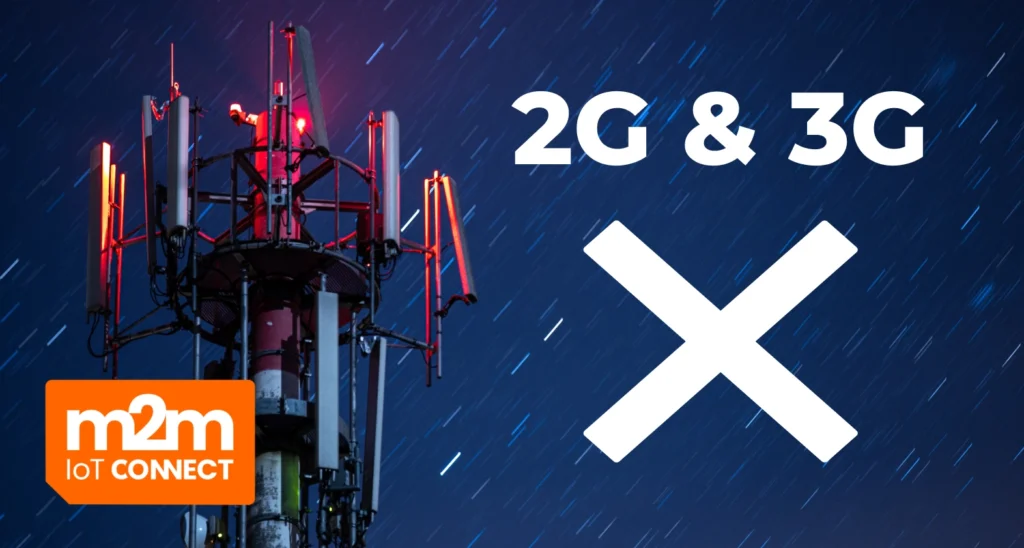
Global 2G and 3G networks are being shut down at record speed as operators worldwide retire legacy technology to free spectrum for 4G and 5G. By mid-2025, more than 278 shutdowns were completed, planned, or underway across 83 countries, and nearly half of tracked operators had already switched off 3G entirely. The Global 2G & 3G Shutdown: What’s Happening and Why It Matters For more than three decades, 2G and 3G networks powered the world’s mobile connectivity. They enabled the first text messages, early mobile internet, and the foundations of modern IoT. But today, these legacy networks are rapidly being retired across the globe. The shift isn’t subtle — it’s accelerating. According to the Global mobile Suppliers Association (GSA), by June 2025 there were 278 operator-led shutdowns completed, planned, or in progress across 83 countries. Meanwhile, research tracking 53 operators across 22 countries shows that 36% have already completed 2G shutdowns and 48% have completed 3G shutdowns. This is one of the biggest infrastructure transitions in mobile history. Why Are 2G and 3G Being Shut Down? 1. Spectrum Re-Farming for 4G and 5G Modern networks need more spectrum. Shutting down 2G/3G frees valuable low-band frequencies for faster, more efficient technologies. 2. Lower Operational Costs Maintaining multiple legacy networks is expensive. Operators are consolidating to reduce energy consumption and simplify infrastructure. 3. Better Performance and Capacity 4G and 5G offer: Higher speeds Lower latency Better indoor coverage Greater device density Legacy networks simply can’t compete. Global Shutdown Timelines The pace varies by region, but the direction is universal. North America USA: Nationwide 3G shutdown completed in 2022; 2G largely retired by 2025. Canada: 3G ending by late 2025; 2G already being phased out. Europe Germany: 3G shut down in 2021; 2G ending by 2028. UK: Both 2G and 3G scheduled to end by 2033. France: 2G shutdown planned for 2026. Asia Many countries accelerating shutdowns to prioritise 4G/5G. Vietnam targeting 3G sunset by 2028. Worldwide Trend By the end of 2025, global support for 2G/3G will be almost non-existent. Impact on IoT, M2M, and Connected Devices This transition is especially critical for IoT businesses. Velos IoT warns that the rapid sunset schedule means companies relying on 2G/3G risk loss of connectivity, urgent field visits, and unexpected hardware replacement costs if they don’t migrate in time. Sectors most affected: Smart meters Vehicle trackers Industrial sensors Security systems Telemetry and remote monitoring Legacy M2M deployments Many of these devices were built for long lifecycles — but the networks they depend on are disappearing. What Should Businesses Do? 1. Audit Your Device Fleet Identify which devices rely on 2G or 3G. 2. Prioritise Migration Move to LTE Cat-M1, NB-IoT, or 4G/5G-capable hardware. 3. Choose Multi-Network SIMs Ensure resilience across multiple operators and technologies. 4. Plan for Future-Proofing Avoid single-technology lock-in. Choose connectivity that supports: LTE-M NB-IoT 4G 5G eSIM / iSIM 5. Act Early Shutdowns often come with short notice periods. Some operators give less than a year’s warning. The Bigger Picture: A New Connectivity Era The global 2G/3G shutdown marks the end of an era — but also the beginning of a more powerful one. As operators reallocate spectrum and modernise infrastructure, the world moves toward a future defined by: Massive IoT Ultra-reliable low-latency communications Smarter mobility More efficient networks Global eSIM adoption For businesses, the message is clear: the time to migrate is now.

Internet of Things (IoT)

Network Bandwidths 2G to 6G

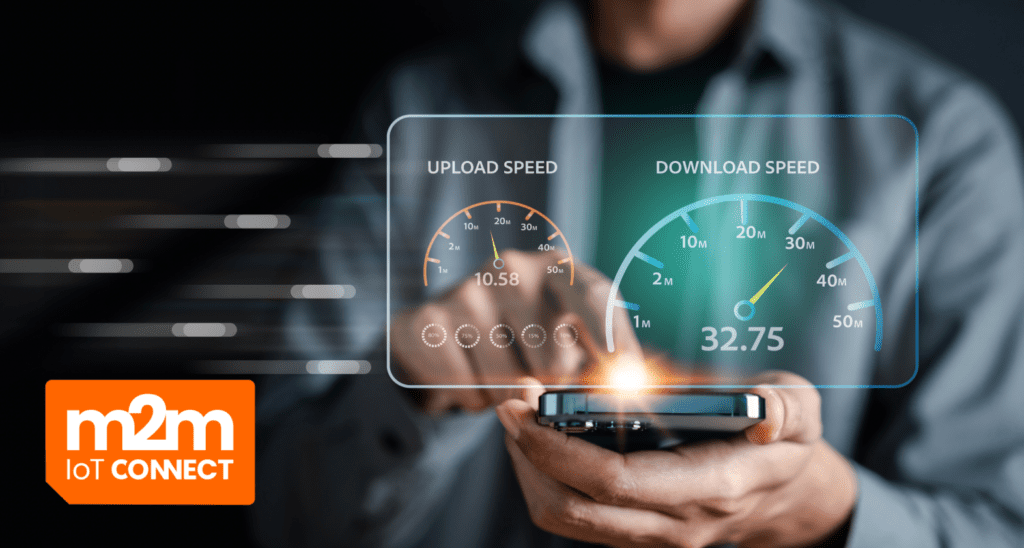
Understanding Mobile Network Bandwidths: 2G to 6G A clear, engaging guide to how each generation of mobile technology transformed speed, capacity, and connectivity. Mobile networks have evolved dramatically over the past three decades. Each generation — 2G, 3G, 4G, 5G, and the emerging 6G — has brought a leap in bandwidth, enabling new services, new industries, and entirely new ways of living and working. This article breaks down the bandwidth capabilities of each generation in a simple, practical way, showing how we progressed from SMS to immersive holographic communication. 2G: The Birth of Digital Mobile Typical Bandwidth: 9.6 kbps – 64 kbps 2G (GSM) marked the transition from analogue to digital mobile networks. It introduced encrypted voice calls and the world-changing SMS text message. What 2G enabled: Basic voice calls SMS Very slow data (GPRS/EDGE) Early M2M and IoT devices Why it mattered:It created the first truly global mobile standard and laid the foundation for everything that followed. 3G: The First Mobile Internet Typical Bandwidth: 384 kbps – 42 Mbps 3G brought mobile internet to the masses. Phones could browse the web, stream low-resolution video, and support early mobile applications. What 3G enabled: Web browsing Email on the go Video calling App-based services Faster IoT and M2M deployments Why it mattered:3G turned mobile phones into pocket computers and sparked the smartphone revolution. 4G: The Era of High-Speed Data Typical Bandwidth: 10 Mbps – 1 Gbps 4G (LTE) transformed mobile connectivity into a broadband-class experience. It enabled the app economy, cloud services, and real-time media. What 4G enabled: HD video streaming Mobile gaming Social media at scale Cloud applications and services High-speed IoT (CCTV, telematics, routers) Why it mattered:4G made mobile the primary way people access the internet. 5G: Ultra-Fast, Ultra-Reliable, Ultra-Low Latency Typical Bandwidth: 50 Mbps – 10 Gbps 5G is not just “faster 4G.” It is a complete redesign of mobile architecture, enabling massive device density and near-instant communication. What 5G enables: Real-time robotics Autonomous vehicles Smart cities Massive IoT (millions of devices per km²) AR/VR and immersive media Why it matters:5G is the backbone of Industry 4.0, powering automation, mobility, and next-generation services. 6G: The Future of Connectivity Projected Bandwidth: 100 Gbps – 1 Tbps 6G is still in development, with commercial rollout expected around 2030. It aims to merge the physical and digital worlds through ultra-high-speed, AI-driven networks. What 6G is expected to enable: Holographic communication Fully autonomous mobility Real-time digital twins Space-to-Earth connectivity AI-native networks Sub-millisecond latency Why it will matter:6G will push connectivity beyond human-to-human communication into machine-to-machine intelligence at planetary scale. The Big Picture: More Than Just Speed Each generation did not just increase bandwidth — it unlocked entirely new industries: 2G → Messaging 3G → Smartphones 4G → Streaming and social media 5G → Automation and smart mobility 6G → Intelligent, immersive, interconnected worlds Bandwidth is the engine behind every digital transformation we have seen — and the ones still to come.

IoT

Predictive Maintenance Use Case

How IoT Connectivity from M2M Data Connect Keeps Assets Running Predictive maintenance has become one of the most valuable applications of IoT. Instead of waiting for equipment to fail, organisations can detect issues early, schedule repairs proactively, and avoid costly downtime. However, predictive maintenance only works when data flows reliably — and that’s where robust IoT connectivity becomes mission-critical. The Challenge Industrial equipment, vehicles, and remote assets often operate in environments where: Connectivity is inconsistent or unavailable Devices move across regions or national borders Local networks vary significantly in signal quality Downtime is expensive and highly disruptive Manual inspections are slow, costly, and reactive Without reliable, always-on connectivity, predictive maintenance systems cannot collect the real-time data required to generate accurate predictions. The Solution: Predictive Maintenance Powered by M2M Data Connect M2M Data Connect provides non-steered, multi-network IoT SIMs that ensure devices always connect to the strongest available signal. This creates a resilient and continuous data pipeline for predictive maintenance systems. How it works Asset monitoringSensors continuously track vibration, temperature, pressure, energy consumption, and component wear. Real-time data transmissionUsing M2M Data Connect’s multi-network IoT SIMs, data flows continuously — even in rural, indoor, or cross-border environments. AI and analytics detect anomaliesMachine-learning models analyse patterns and identify early indicators of potential failure. Automated maintenance triggersAlerts are sent to engineers, spare parts are ordered, and maintenance is scheduled before breakdowns occur. Continuous performance improvementAs more data is collected, the predictive models become increasingly accurate and effective. Why M2M Data Connect Makes Predictive Maintenance Work 1. Non-Steered Connectivity with No Network Bias Devices always connect to the strongest available signal rather than a preferred “home” network, ensuring maximum uptime. 2. Multi-Network Resilience If one network becomes unavailable, the SIM automatically switches to another with no manual intervention. 3. Global Coverage for Mobile Assets Ideal for fleets, logistics operations, and machinery that regularly crosses borders. 4. Low-Latency Data for Real-Time Alerts Fast and reliable data transmission ensures anomalies are detected as early as possible. 5. Scalable for Thousands of Devices Well suited for manufacturers, utilities, transport operators, and smart-infrastructure providers. Real-World Example A manufacturing company deploys vibration and temperature sensors across its production line. With M2M Data Connect IoT SIMs: Sensors remain connected even in metal-dense factory environments Data streams continuously to the analytics platform Early signs of motor wear are detected Maintenance is scheduled before failure occurs As a result, the company avoids unplanned downtime valued at £50,000 per hour. Predictive maintenance becomes not just a technical improvement, but a measurable financial benefit. The Outcome With M2M Data Connect powering the connectivity layer, organisations achieve: Fewer unexpected breakdowns Lower maintenance costs Longer asset lifespans Higher operational efficiency Improved safety and regulatory compliance More predictable business performance Predictive maintenance only works when connectivity is rock-solid. M2M Data Connect ensures it is.

IoT

M2M Data Connect EV Charging Use Case

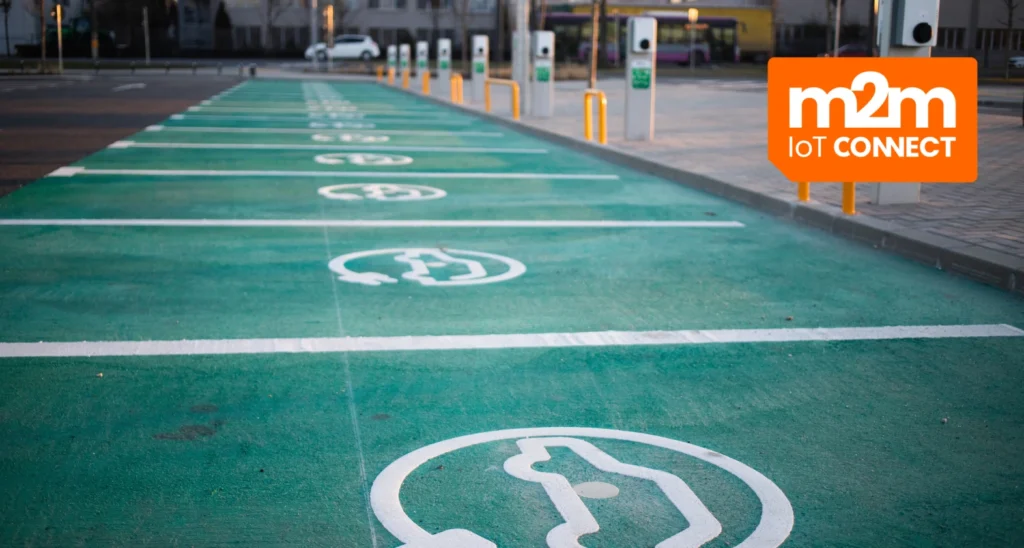
EV Charging Use Case – Powered by M2M Data Connect IoT Connectivity & Cellular Routers Customer Profile A fast‑growing EV charging operator deploying public, workplace and fleet charging stations across the UK and Europe. Their network includes AC chargers, DC rapid chargers, and smart home charging units — all requiring stable, secure, real‑time connectivity. The Challenge To scale their EV charging network, the operator needed a connectivity solution that could support: Real‑time charger status updates Payment processing and billing Remote diagnostics and firmware updates High uptime for public charging points Secure communication between chargers and cloud systems Reliable connectivity in car parks, rural areas and underground locations Traditional SIMs and single‑network solutions caused: Frequent network dropouts Failed transactions and customer frustration Slow fault detection, requiring on‑site visits Inconsistent data across the charging network High operational costs due to manual resets and maintenance To deliver a seamless charging experience, the operator needed multi‑network IoT connectivity and industrial cellular routers capable of supporting high‑availability EV infrastructure. The Solution: M2M Data Connect + Industrial Cellular Routers M2M Data Connect deployed multi‑network IoT SIMs across all EV chargers, paired with rugged 4G/5G cellular routers to ensure stable, secure connectivity at every charging location. Key Components Multi‑network IoT SIMs that automatically switch to the strongest available signal Industrial 4G/5G routers for high‑bandwidth, low‑latency communication Secure VPN connectivity for encrypted data transfer Centralised SIM management portal for monitoring usage and diagnostics Real‑time data transmission for charger status, payments and alerts Remote firmware updates to reduce on‑site maintenance Results & Impact 99.9% Charger Uptime Multi‑network connectivity ensures chargers stay online even in challenging locations. Faster Payment Processing Stable connectivity reduces failed transactions and improves customer satisfaction. Remote Diagnostics & Maintenance Operators can identify faults instantly and push updates remotely. Outcome: fewer site visits and lower operational costs. Real‑Time Monitoring Across the Network Every charger reports live status, usage, and performance data. Outcome: better planning, load balancing and asset management. Scalable Deployment New chargers can be installed anywhere — car parks, retail sites, rural areas — without worrying about network coverage. Enhanced Security Routers and VPN connectivity protect payment data and comply with industry standards. Why M2M Data Connect for EV Charging? Multi‑network resilience across the UK and Europe Industrial routers built for harsh outdoor environments Secure, encrypted connectivity for payments and telemetry Scalable solutions for networks of any size Expert support for EV charging operators and OEMs Summary By combining M2M Data Connect IoT connectivity with industrial cellular routers, the EV charging operator transformed their network into a reliable, scalable, and secure charging ecosystem. The result: higher uptime, lower costs, seamless payments, and a better experience for EV drivers.

Smart agriculture SaaS

Smart Farming Use Case

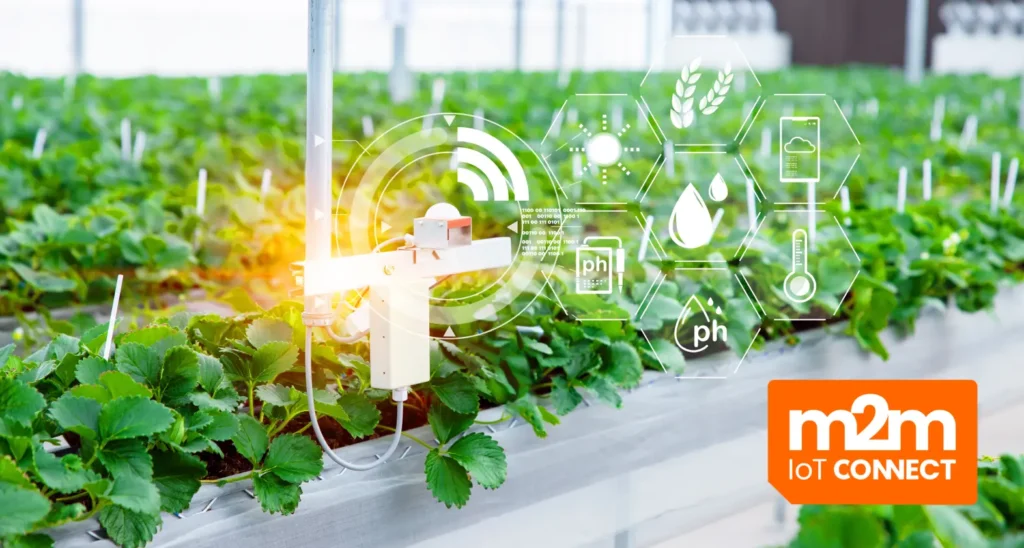
Powered by M2M Data Connect IoT Connectivity & Cellular Routers Customer Profile A large mixed‑crop and livestock farm in rural Europe operating across several hundred hectares. The farm uses a combination of tractors, irrigation systems, soil sensors, livestock trackers, and automated feeding equipment — all requiring reliable, always‑on connectivity. The Challenge The farm wanted to modernise operations using smart farming technologies, but faced several long‑standing issues: Poor rural network coverage causing IoT sensors and equipment to disconnect No central visibility of machinery, livestock, or environmental conditions High fuel and fertiliser costs due to inefficient resource use Machinery downtime during peak seasons Manual processes slowing down decision‑making Inconsistent data from different devices and vendors To unlock the full value of precision agriculture, the farm needed reliable IoT connectivity and rugged cellular routers capable of supporting sensors, automation systems, and cloud‑based analytics. The Solution: M2M Data Connect + Industrial Cellular Routers M2M Data Connect deployed multi‑network IoT SIMs across all sensors, trackers, and connected machinery, paired with industrial‑grade cellular routers installed in key locations around the farm. Key Components Multi‑network IoT SIMs ensuring devices stay online by switching to the strongest available signal 4G/5G cellular routers providing stable connectivity for gateways, irrigation systems, and farm buildings Centralised SIM management portal for monitoring usage, diagnostics, and remote control Low‑power IoT connectivity for long‑life soil, weather, and livestock sensors Secure VPN connectivity for remote access to machinery and farm systems Results & Impact Precision Agriculture at Scale Soil sensors, weather stations, and irrigation systems now deliver real‑time data, enabling targeted watering and fertiliser application. Outcome: lower input costs and higher yields. Reduced Machinery Downtime Routers and IoT SIMs enable telematics for tractors and harvesters, providing predictive maintenance alerts. Outcome: fewer breakdowns during critical harvest windows. Improved Livestock Health & Welfare Connected tags track animal movement, temperature, and behaviour. Outcome: early detection of illness and reduced losses. Full Visibility Across the Entire Farm All devices from soil probes to fuel tanks report into a single dashboard via M2M Data Connect. Outcome: faster decisions and better planning. Reliable Connectivity in Remote Fields Multi‑network SIMs eliminate coverage blackspots across the farm’s land. Outcome: consistent data flow, even in isolated areas. Increased Revenue & Lower Costs Automation, reduced waste, and improved productivity directly increase profitability. Outcome: measurable ROI within the first season. Why M2M Data Connect for Smart Farming? Proven performance in rural and remote environments Multi‑network resilience across Europe Industrial routers built for harsh agricultural conditions Scalable connectivity for thousands of devices Expert support for agri‑tech deployments Summary By combining M2M Data Connect IoT connectivity with industrial cellular routers, the farm transformed its operations into a fully connected smart farming ecosystem. The result: higher yields, lower costs, healthier livestock, and a more sustainable, data‑driven future.

Uncategorized

Ericsson Routers + M2M Data Connect

Why Ericsson Routers + M2M Data Connect Unsteered IoT Connectivity Deliver Carrier‑Grade Reliability When your IoT deployment demands enterprise‑level uptime, industrial resilience, and global scalability, the combination of Ericsson cellular routers and M2M Data Connect’s unsteered multi‑network IoT connectivity delivers a level of performance that steered SIMs simply can’t match. Ericsson is one of the world’s most trusted names in telecom infrastructure and their routers bring the same carrier‑grade engineering to IoT. Pair that with connectivity that never forces a device onto a preferred network, and you unlock a powerful, future‑proof solution for mission‑critical applications. Ericsson: Carrier‑Grade Routers Built for Mission‑Critical IoT Ericsson’s industrial routers are designed for environments where failure is not an option — utilities, transport, public safety, energy, and large‑scale enterprise networks. Their hardware is known for exceptional stability, advanced security, and long‑term reliability. Popular models include: Ericsson W30 – Industrial 4G router for remote monitoring, utilities, and enterprise IoT Ericsson W35 – Rugged router with advanced failover and voice capabilities Ericsson W25 – Reliable LTE router for fixed wireless access and branch connectivity Ericsson W21 – Compact, robust router ideal for retail, kiosks, and remote sites These routers are engineered for high availability — but their true performance shines when paired with connectivity that lets them choose the best network at all times. Ericsson’s Intelligent Network Handling: Built to Make Smart Decisions Ericsson routers include advanced network‑selection and radio‑resource management features, allowing them to: Scan all available networks Measure signal strength, quality, and latency Automatically select the best operator Re‑select networks dynamically as conditions change Maintain stable VPN tunnels and low‑latency links This intelligence is designed to maximise uptime — but it only works properly when the SIM card doesn’t force the router onto a specific network. That’s where M2M Data Connect’s unsteered IoT connectivity becomes essential. The Problem With Steered IoT SIMs Steered SIMs prioritise one mobile network over others, even when that network is congested or weak. This causes: Dropouts and reconnection loops Higher latency Slower throughput Reduced hardware lifespan Poor performance in rural or high‑traffic areas For Ericsson routers — built to make intelligent network decisions — steering becomes a performance bottleneck. Unsteered Connectivity: Let Ericsson Do What It Was Designed For M2M Data Connect provides unsteered, multi‑network IoT SIMs, giving Ericsson routers complete freedom to attach to the strongest available network at any moment. This unlocks the full potential of Ericsson’s network‑selection engine, delivering: Stronger, more stable signal Lower latency for industrial systems Faster data throughput Seamless roaming across regions and borders Higher uptime in mission‑critical deployments Ericsson’s intelligence + M2M’s neutrality = carrier‑grade performance. Why Ericsson + M2M Data Connect Is a Perfect Match 1. Enterprise‑Grade Reliability Ericsson routers are built for critical infrastructure. Unsteered connectivity ensures they always operate on the best available network. 2. Unified APN for Global Deployments M2M Data Connect uses a single APN across all supported networks and countries, enabling: One configuration for all devices Faster deployments Easier scaling Fewer support issues Ideal for large enterprise rollouts. 3. Better Performance for High‑Bandwidth Applications Ericsson routers paired with unsteered connectivity deliver exceptional performance for: CCTV streaming Industrial automation Remote diagnostics Smart grid systems 4. Perfect for Mobile and Fixed Deployments Whether stationary or on the move, Ericsson routers maintain stable connectivity thanks to dynamic network selection. Use Cases & Sectors That Benefit Most Utilities & Energy Smart grid Substation monitoring Renewable energy sites Transport & Telematics Fleet tracking Public transport systems Mobile command units CCTV & Security Remote surveillance ANPR cameras Critical infrastructure security Retail & Payments POS terminals Kiosks Digital signage Industrial & Manufacturing SCADA PLC connectivity Predictive maintenance Smart Cities Traffic systems Air quality sensors Parking solutions Healthcare Remote diagnostics Telemedicine Mobile clinics Conclusion: Enterprise IoT Without Compromise Ericsson routers provide the carrier‑grade hardware.M2M Data Connect provides the resilient, unsteered connectivity. Together, they deliver a high‑performance, scalable, and ultra‑reliable IoT solution that excels across every industry and environment.

M2M IoT Connect Logo

Bring Your Own Carrier (BYOC) IoT SaaS Platform that unlocks unprecedented insights and gives access to advanced functionality.

M2M IoT Connect HQ

112-114 Witton Street, Northwich CW9 5NW United Kingdom

© 2026 M2M IoT Connect. All Rights Reserved. 

Scroll to Top
Seraphinite AcceleratorOptimized by Seraphinite Accelerator
Turns on site high speed to be attractive for people and search engines.